PUR spray foam insulation
PUR foam is an excellent thermal insulation solution. In winter it keeps heat in the building. In summer it makes the attic as comfortable as the other floors of the property.
PUR foam – what is it?
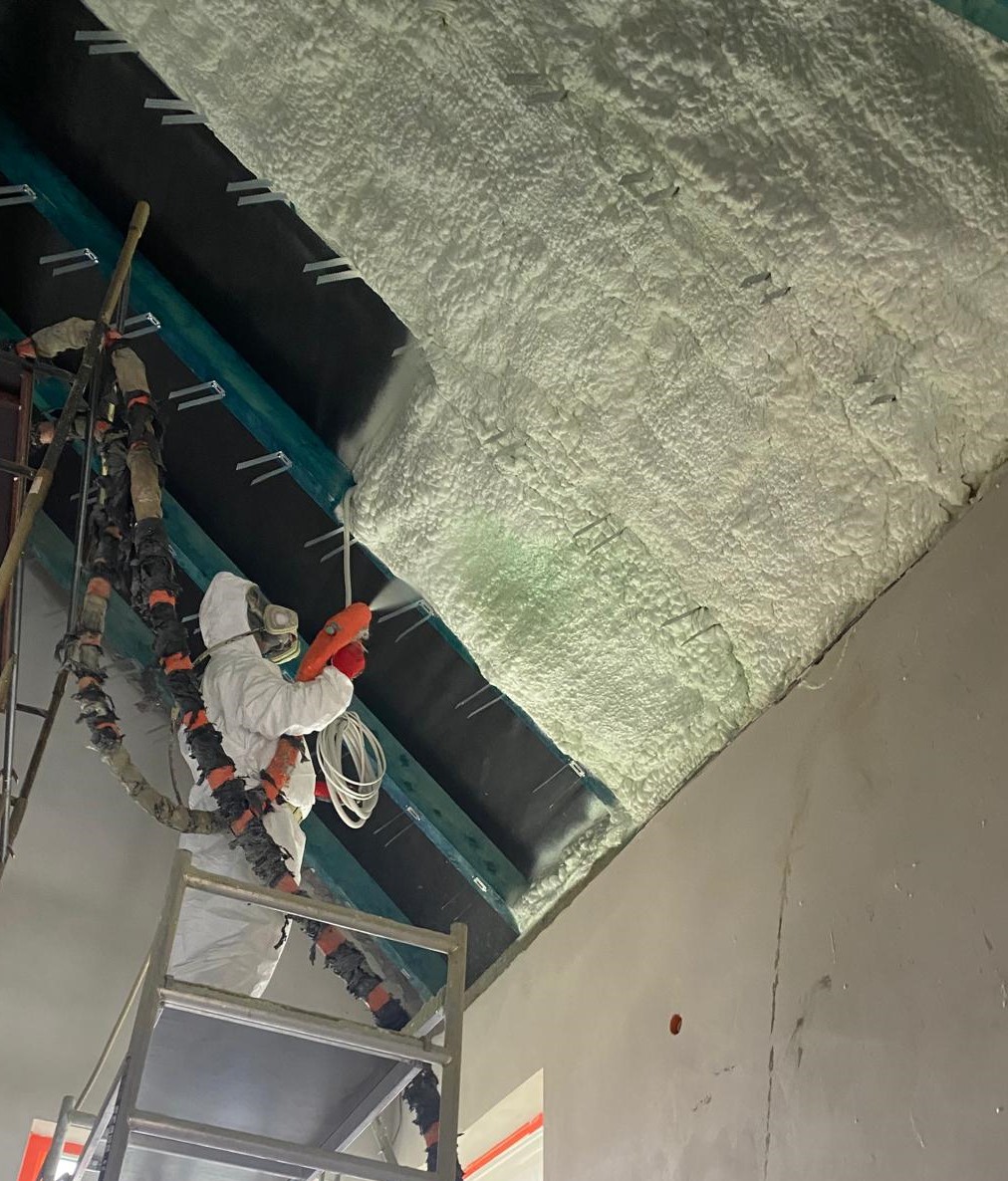
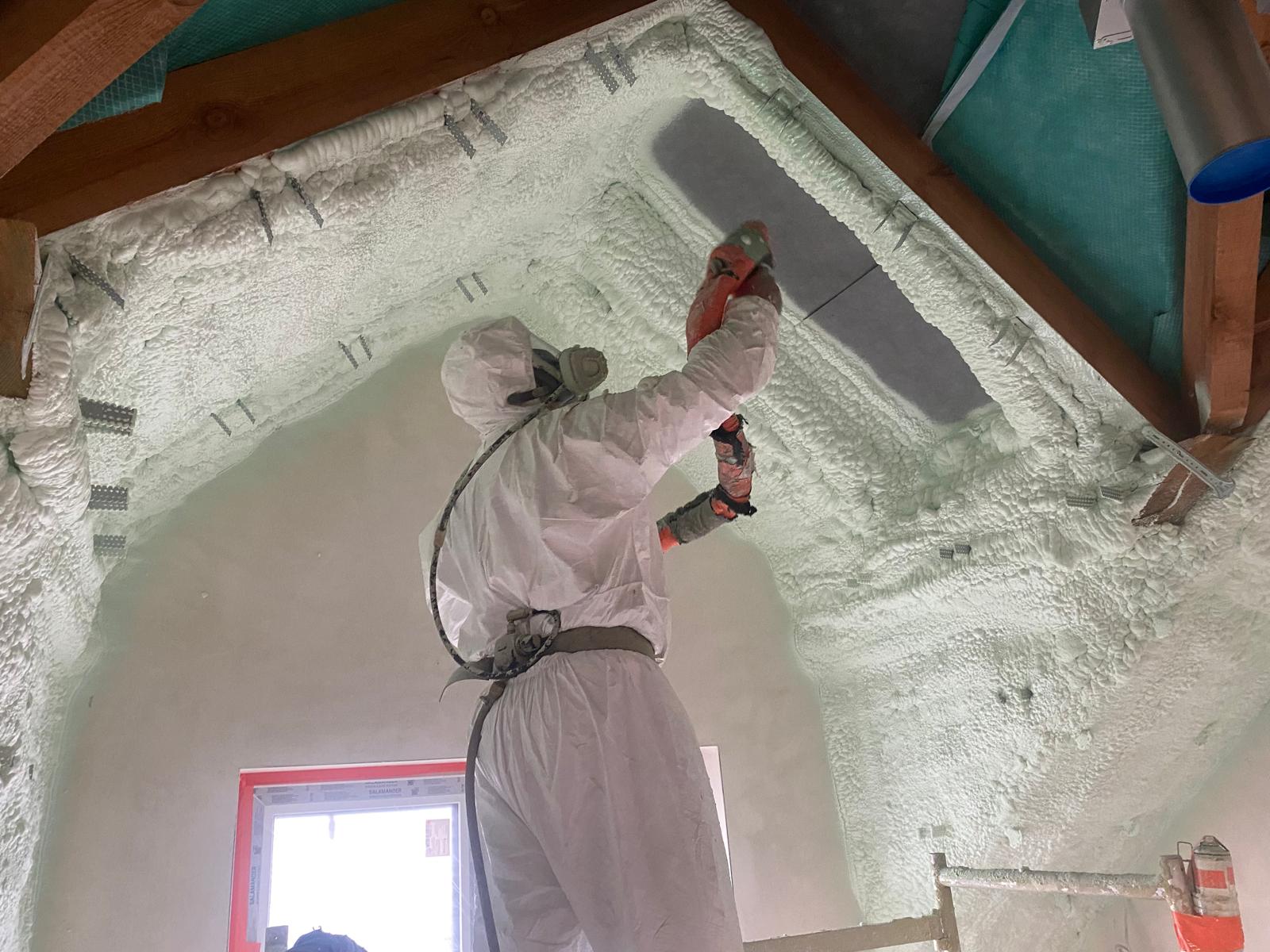
We apply polyurethane PUR foam by spraying. Two components are heated and fed under pressure to the spray gun. When they mix, a chemical reaction starts; the foam expands on the surface being insulated and forms an insulating layer.
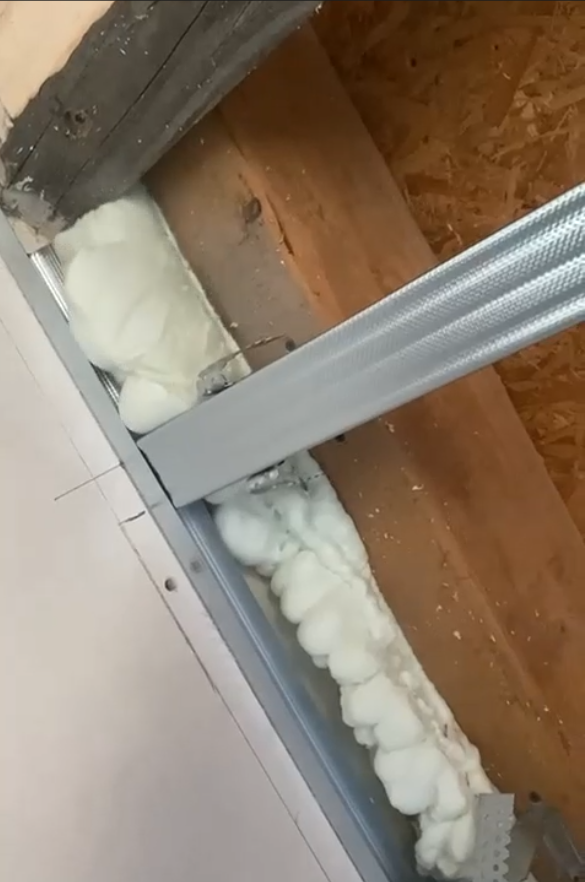
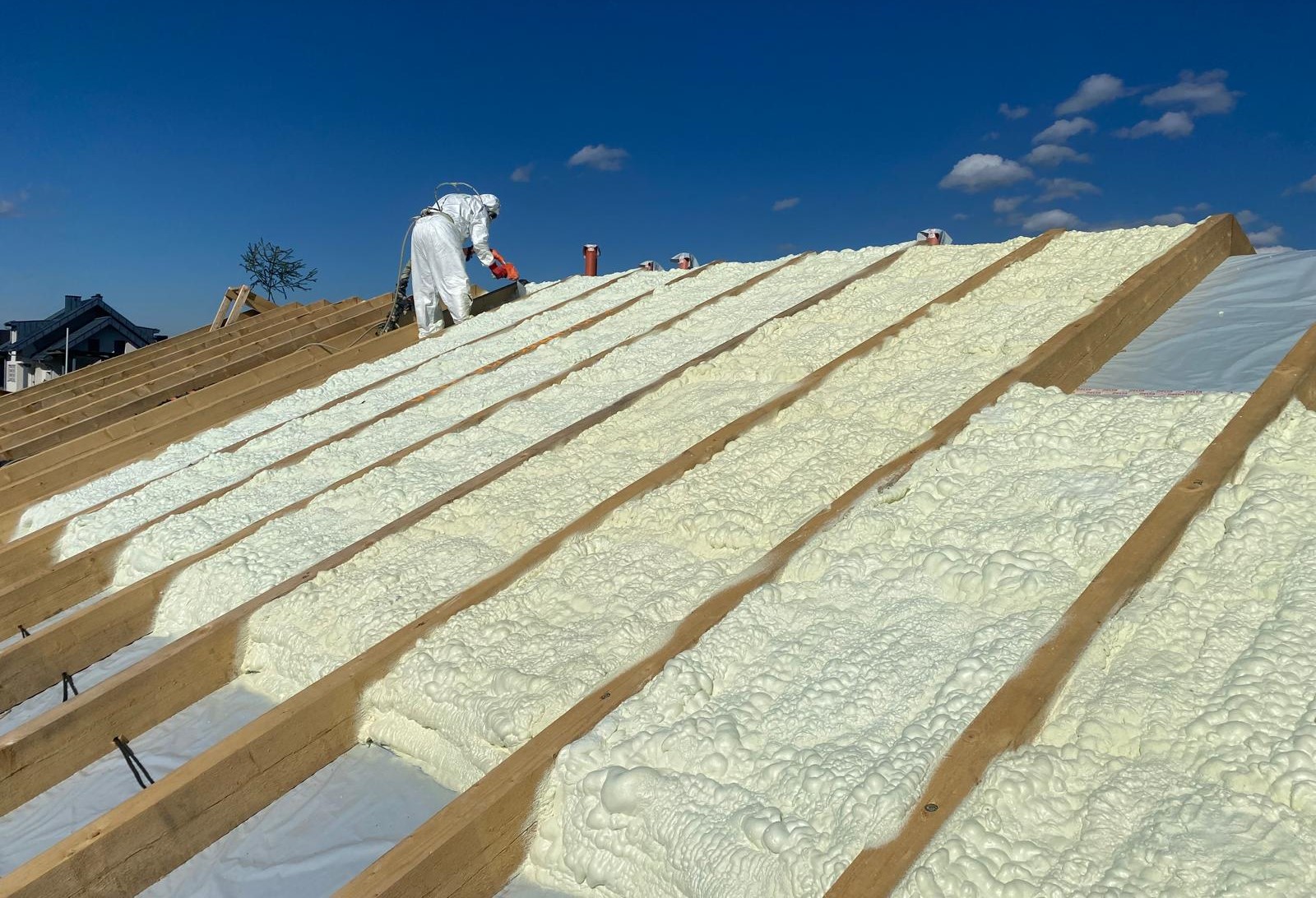
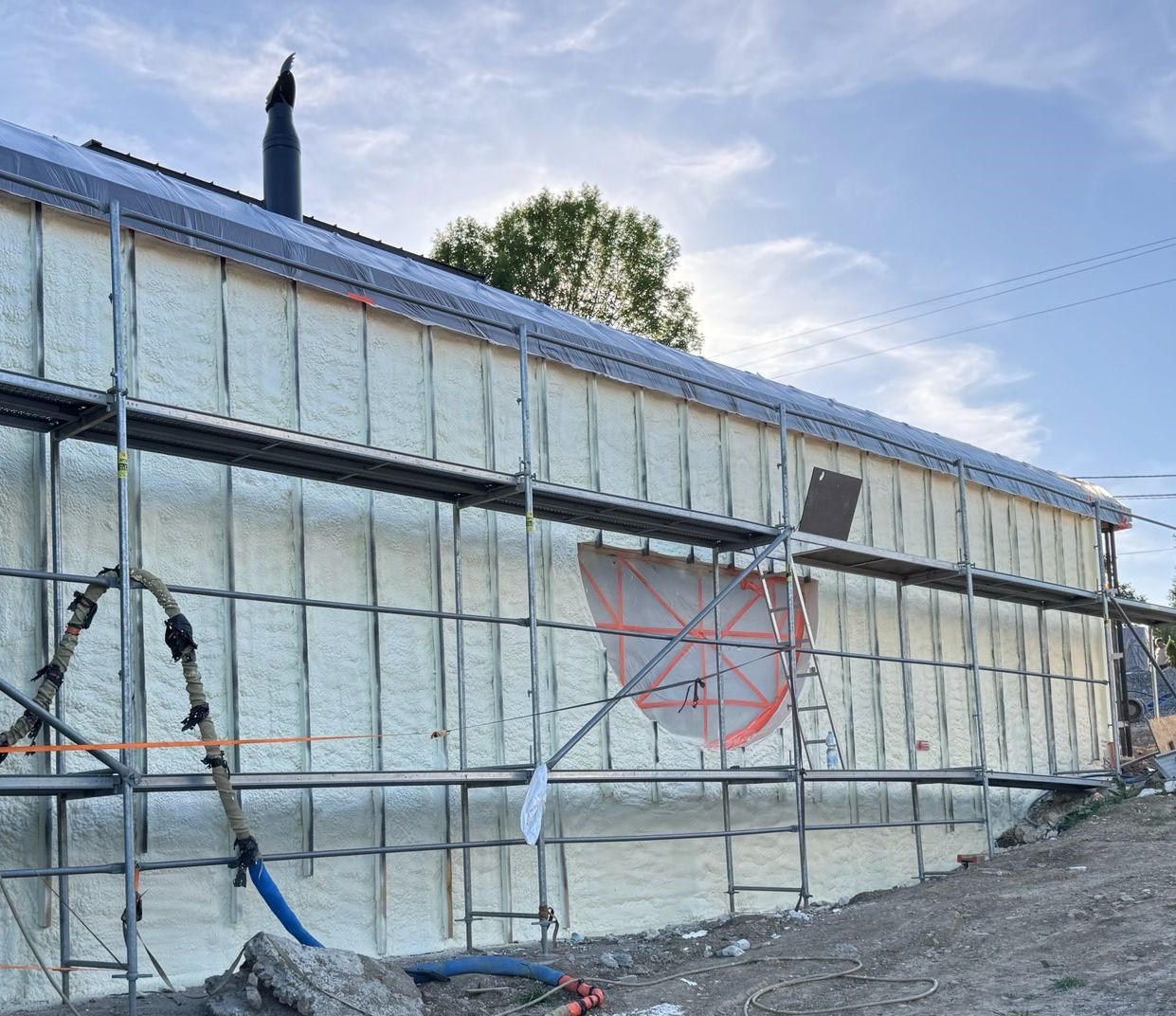
That is how it follows rafters, joints, breaks, service penetrations and every hard-to-reach spot, filling every gap. That matters, because any gap in the insulation can become a path for heat loss or air movement. Spraying fills the space between structural members thoroughly.
Advantages of PUR foam insulation
Spraying cuts the number of joints and gaps typical of materials laid in rolls or boards.
It fills gaps at rafters, joints and service penetrations.
Up to 200 m² in a single day.
In practice that can mean more usable space in the attic.
It does not have to be cut to fit every part of the roof frame.
Open-cell foam does not add a significant extra load to the structure.
Open-cell foam in particular can dampen sound.
It allows water vapour to diffuse. Open-cell foam is more vapour-permeable than closed-cell foam.
It does not settle the way loosely laid insulation does. It keeps its shape and performance for many years.
Two technologies for different uses: open-cell for attics and interiors, closed-cell where you need more rigidity, lower water absorption and very good insulation at a smaller thickness.
What do we insulate with PUR foam?
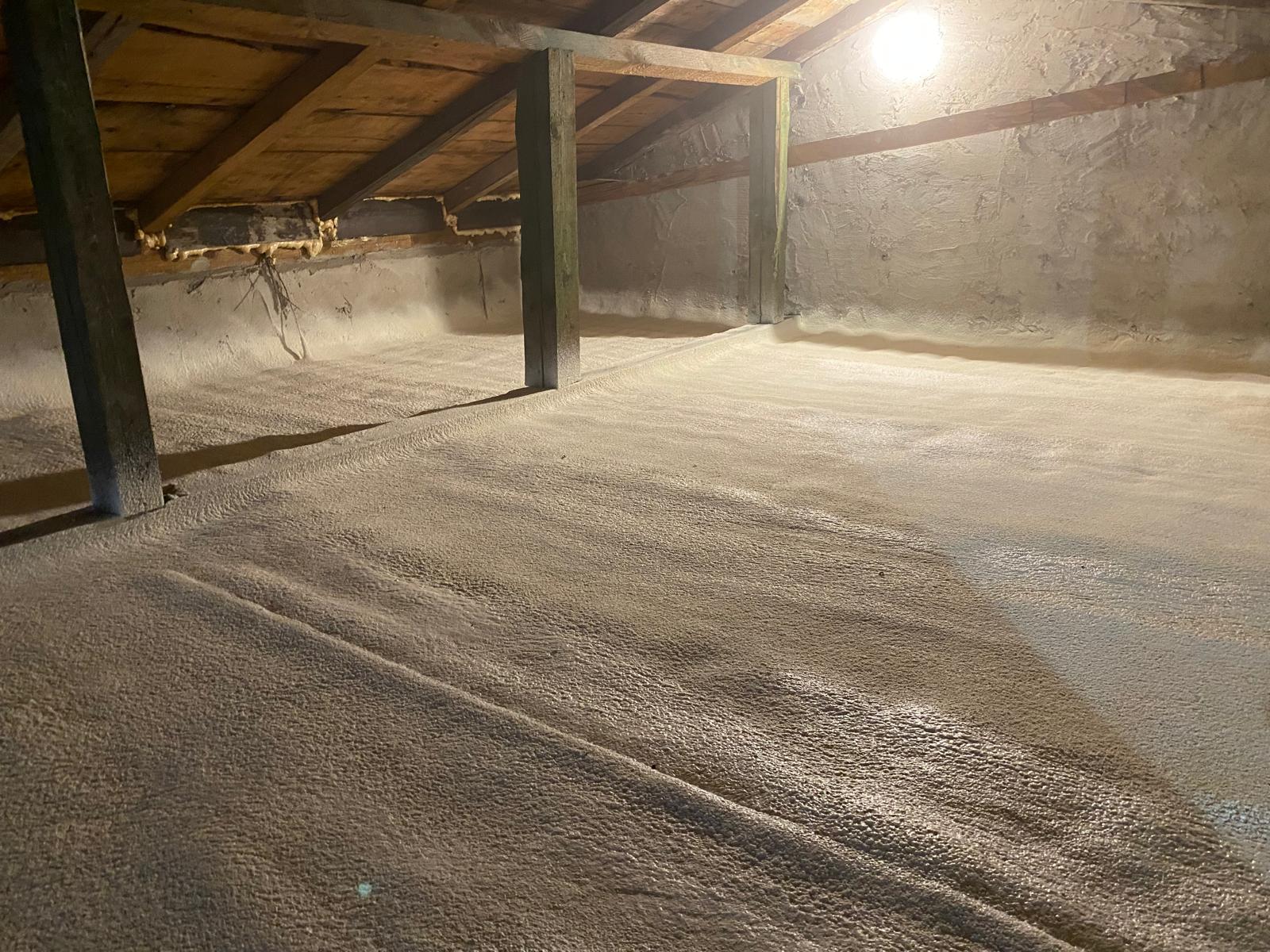
Attics, pitched roofs, floors, timber-frame structures, foundations.
Halls, warehouses, workshops, farm buildings.
Open-cell or closed-cell foam? Which one to choose?
These are two different materials, each for a different use.
It is light, resilient, vapour-permeable and good at damping sound. We most often use it for insulation inside the building: attics, floors, timber-frame structures.
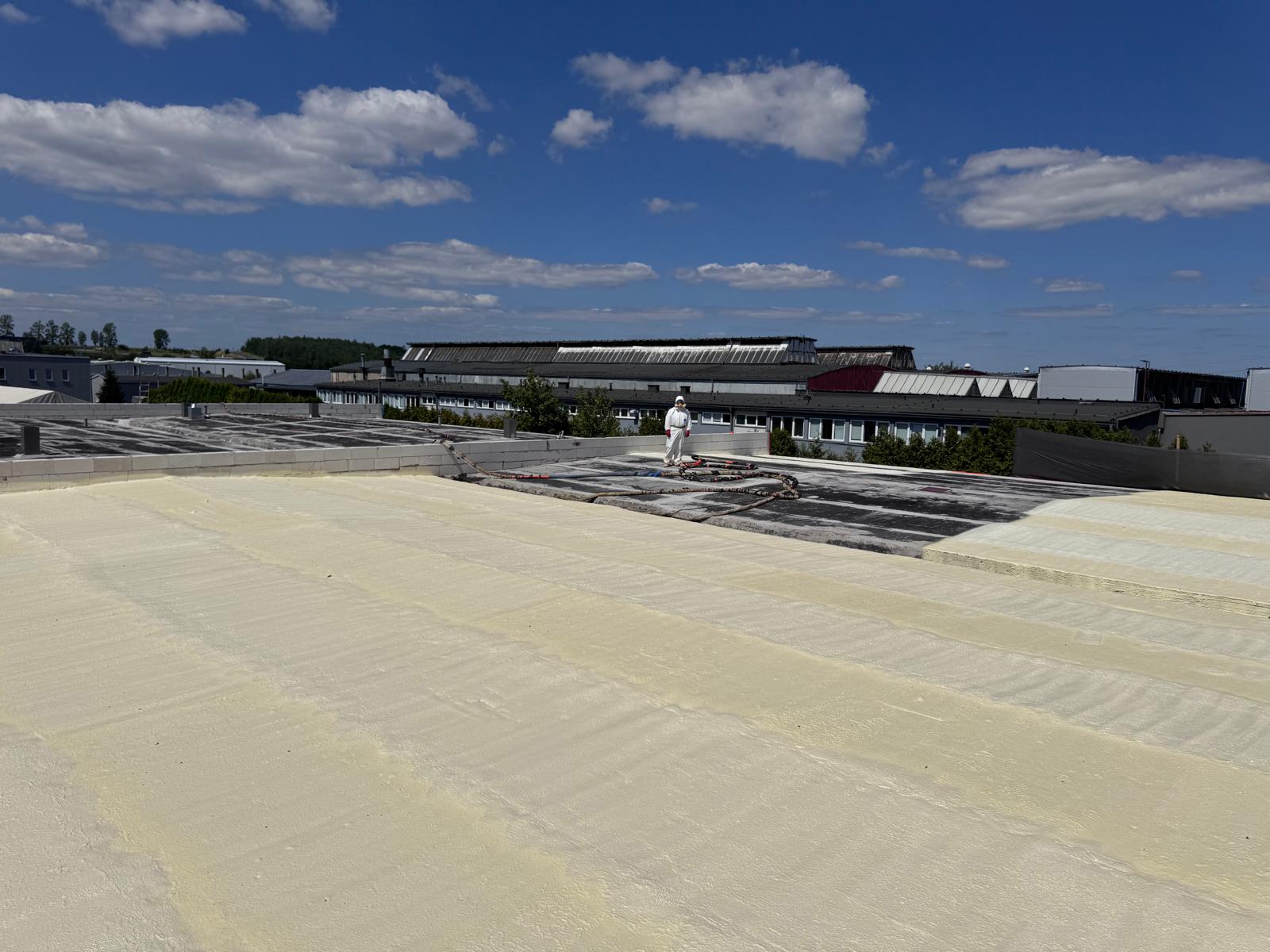
It is denser and stiffer, with lower water absorption and better thermal performance. We use it on roofs, halls, industrial buildings and foundations — wherever the insulation is more exposed to moisture and outdoor conditions.
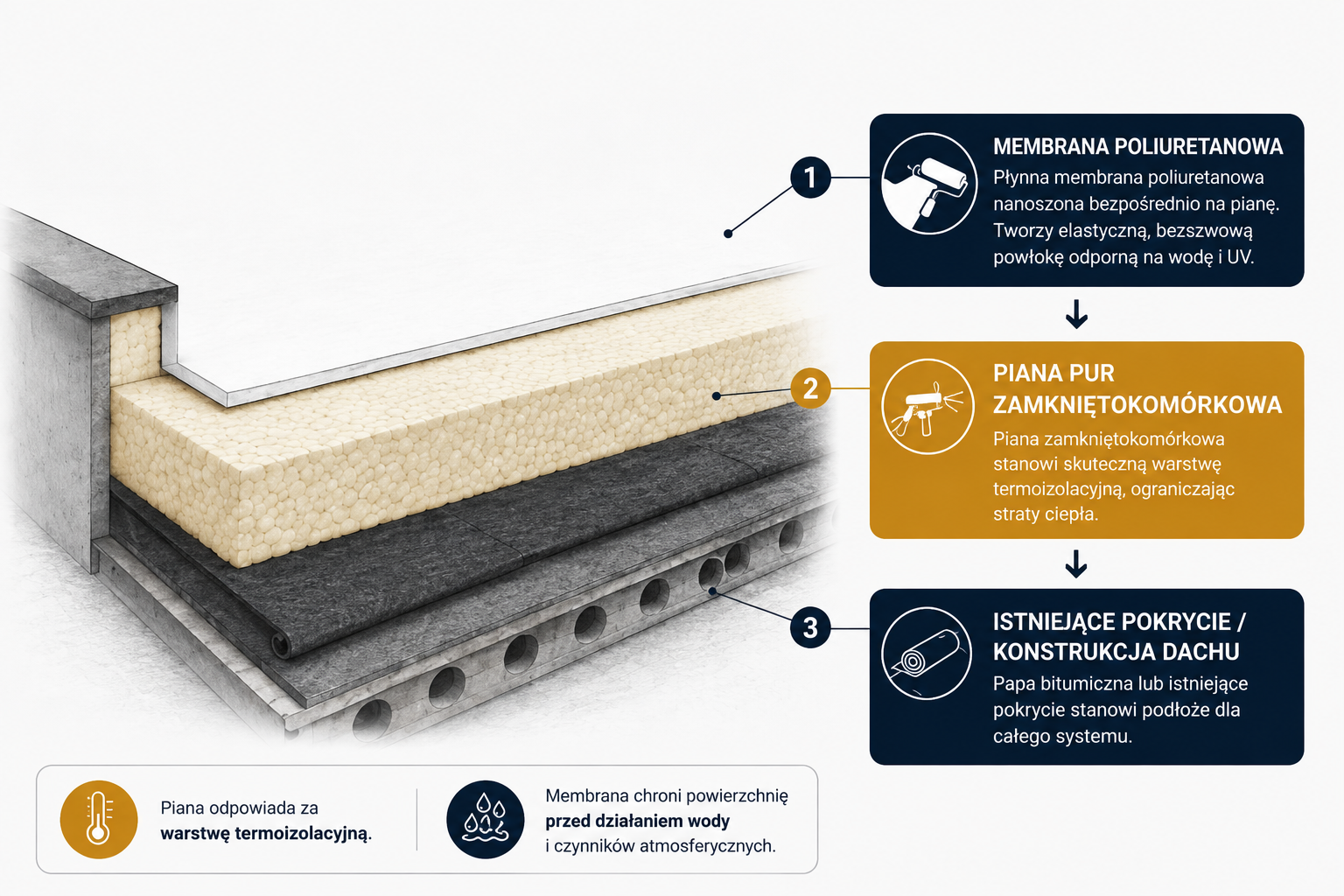
An extra advantage of closed-cell foam is that it can be protected with a polyurethane membrane. The foam then provides the thermal insulation, while the membrane provides the outer waterproofing and protects the foam from UV and the weather.
How does Thermocomplex apply PUR foam insulation?
1
Site survey
Before we start we check the area to be insulated, the condition of the structure and the conditions on site. We also check timber moisture — we do not spray onto a wet, frosted or frozen structure. If the timber is too damp, the roof is leaking or mould has appeared, the problem has to be fixed first. Sometimes waiting a few days is wiser than trapping moisture in the structure for years.
2
We install a membrane if needed
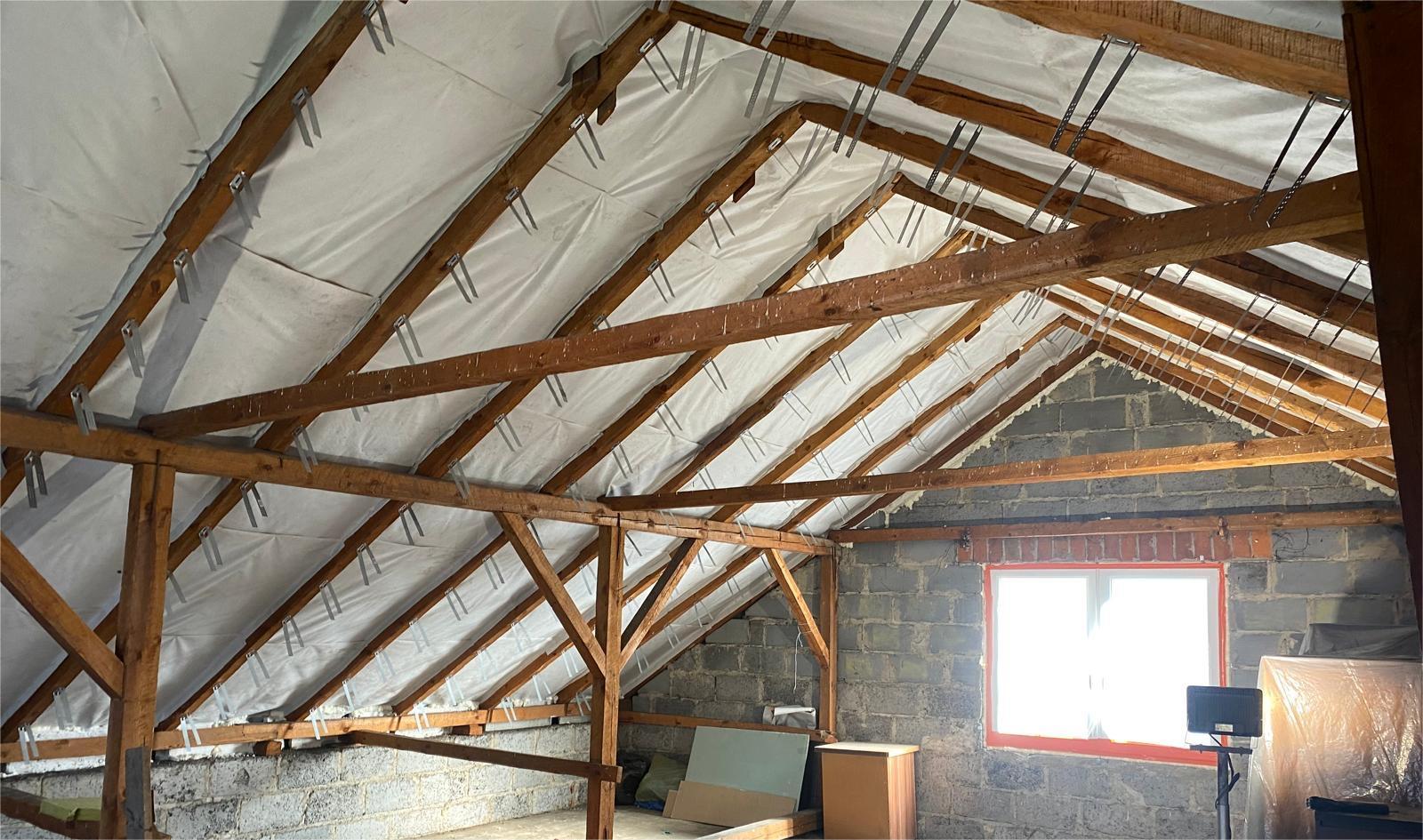
If the roof structure requires it and a membrane has not been installed yet, we can prepare this stage before spraying the foam. The membrane is part of a properly designed roof build-up, so we match whether and how it is installed to the specific structure.
3
We fit hangers for plasterboard
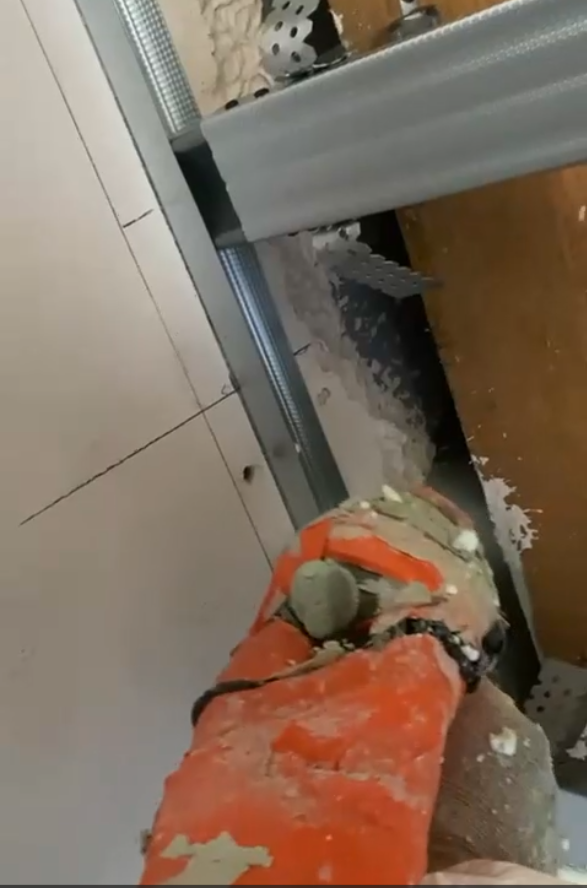
If the client asks, we fit hangers for the future plasterboard ceiling before spraying. After the insulation is done there is no need to hunt for rafters under the foam or cut into the finished insulation. The attic is ready not only for insulation but also for lining.
4
We protect the building
Before spraying we thoroughly sheet and tape windows, doors, garage doors, services, MVHR ducts and other elements that need protection.
5
We prepare the material and equipment
We work with professional American GRACO equipment and our own generator. For spraying we use certified, approved PUR foam from a Polish manufacturer with very good performance.
6
We spray the PUR foam
The foam is applied directly onto the prepared surface. During the reaction it expands, following the structure and filling hard-to-reach spots. We apply the thickness agreed with the client, paying particular attention to rafters, joints and other structural members.
7
We inspect the finished insulation
After spraying we check continuity, thickness and the spots that need extra attention. The result is a continuous thermal layer and an attic ready for the next stages of work.
Thermal insulation + waterproofing
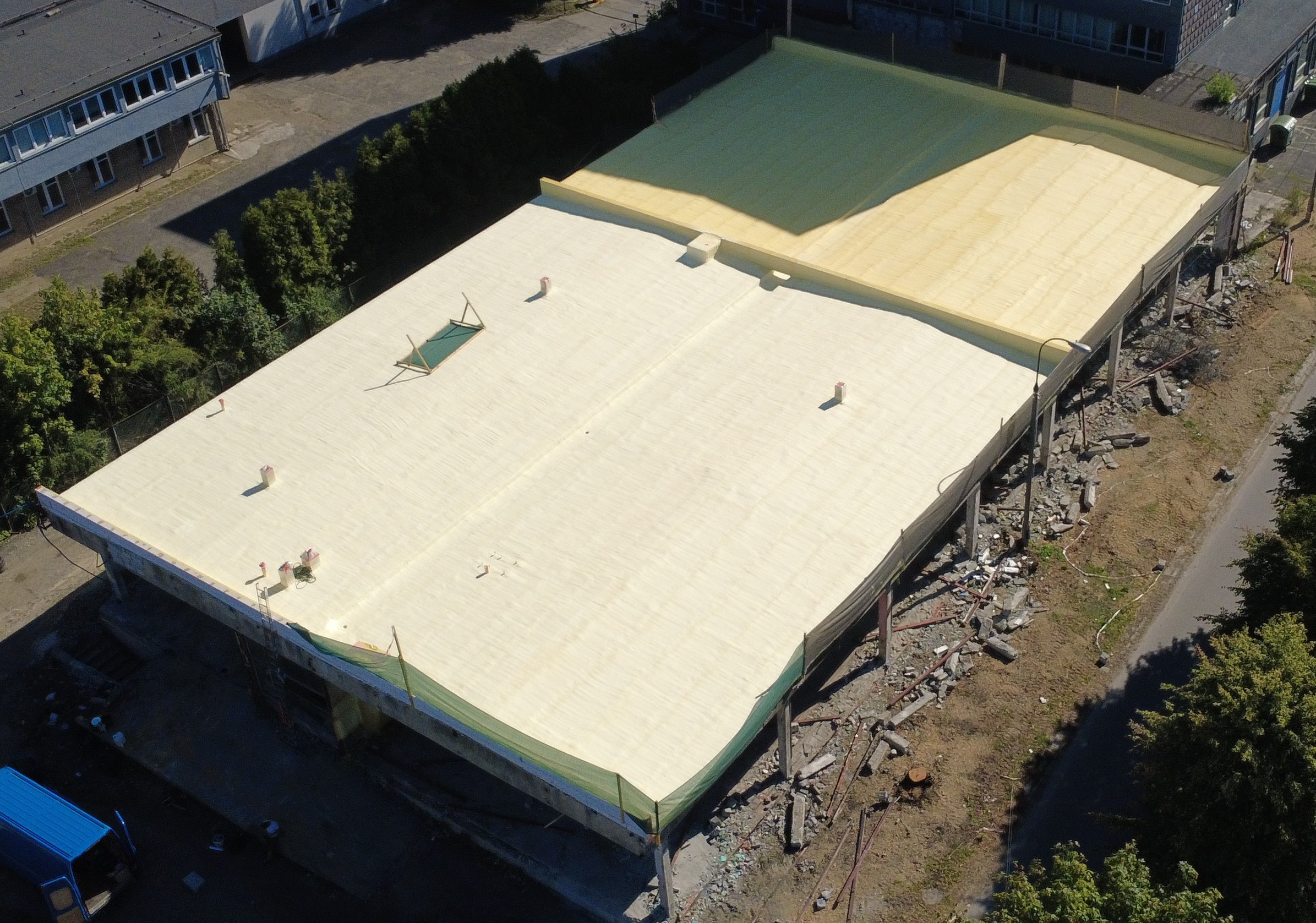
On large-area buildings, closed-cell foam combined with a liquid polyurethane membrane system is an excellent solution.
The foam provides the thermal layer, while the membrane protects the surface from water and the weather. This is especially worth considering when refurbishing halls, warehouses and other industrial buildings.
Want to insulate an attic, a roof or a hall?
Call us on 663 322 000 and book a free quote. We work in the Silesian and Lesser Poland voivodeships as well as in the Czech Republic and Slovakia. You can also reach us via the form on the site.