

Waterproofing of flat and industrial roofs
Refurbishing leaking roofs without stripping the whole covering.
Cracks, detachment, another round of patches and leaks. Water getting through a leaking covering can soak the layers below, weaken the thermal insulation and, over time, damage structural elements. Before you commit to a costly full roof replacement, check whether seamless polyurethane membrane waterproofing can be applied on the existing covering.
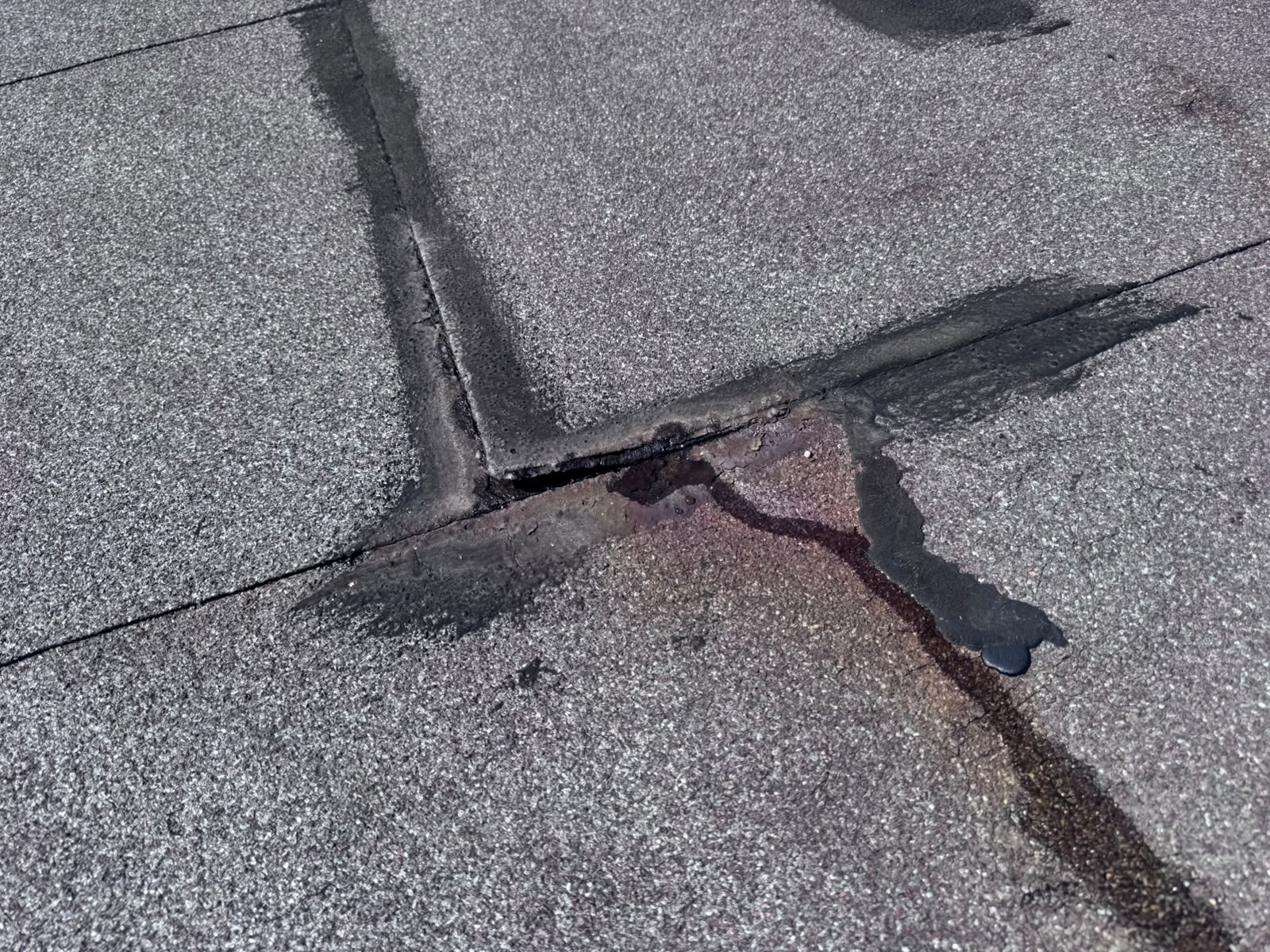
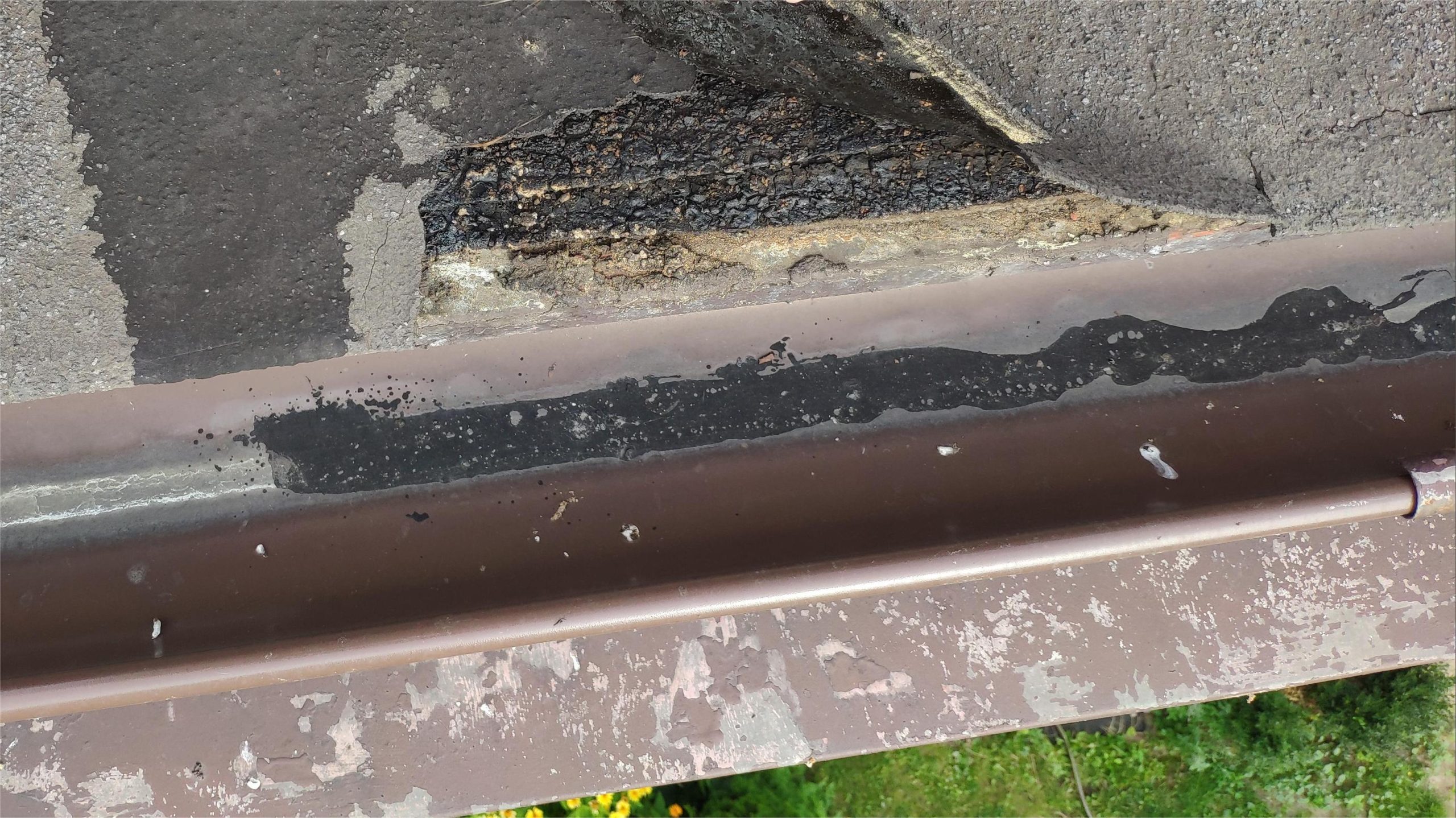
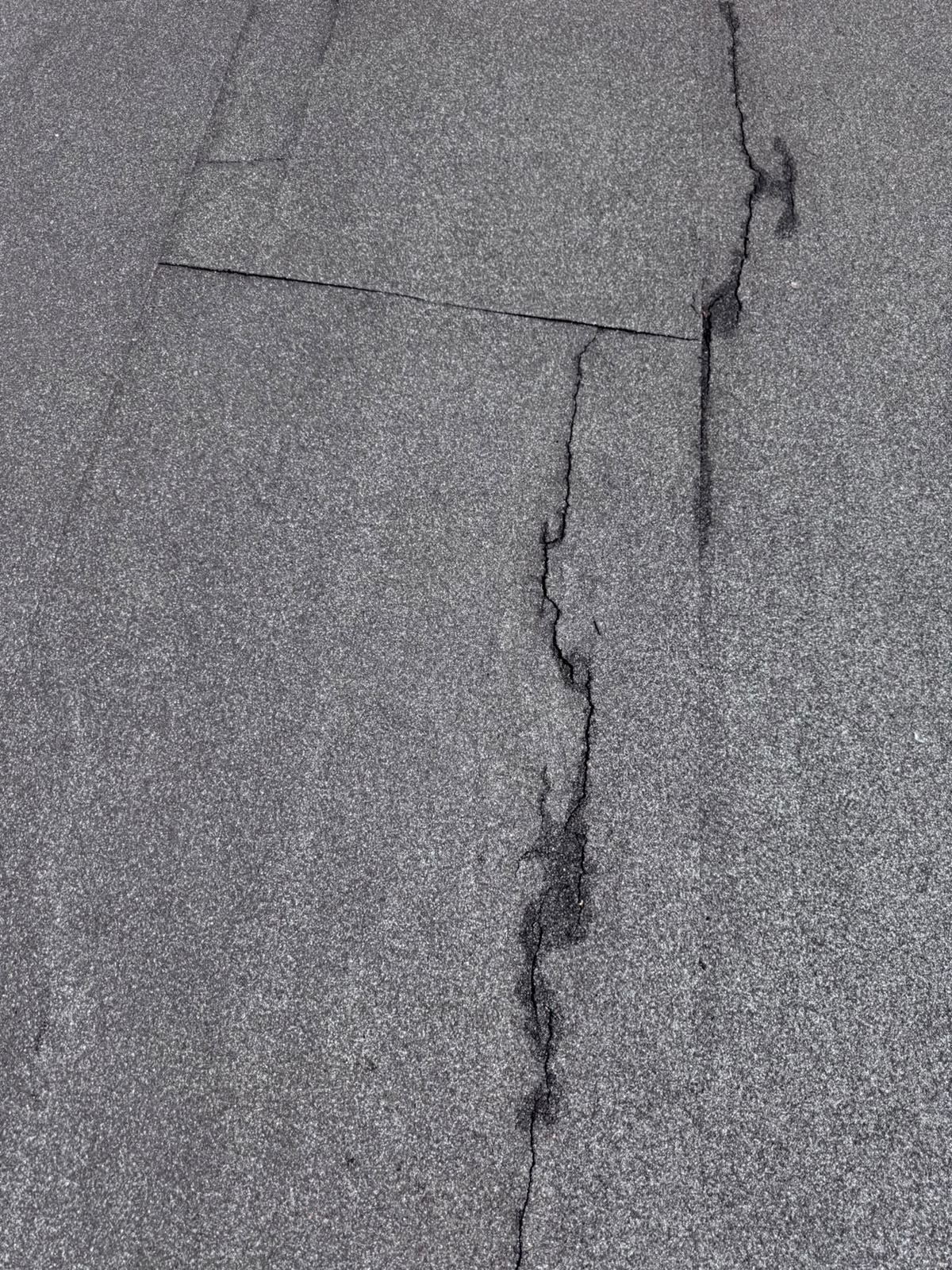
After the survey you already know — not just the membrane, but a complete roof refurbishment.
We'll take care of it!
If the existing covering allows it, at Thermocomplex we can handle the whole process: roof assessment → preparation → repairs → flashings → waterproofing → a finished roof. This is what we do. Below: a 1,200 m2 hall, from repairs through PUR foam to two membrane coats.
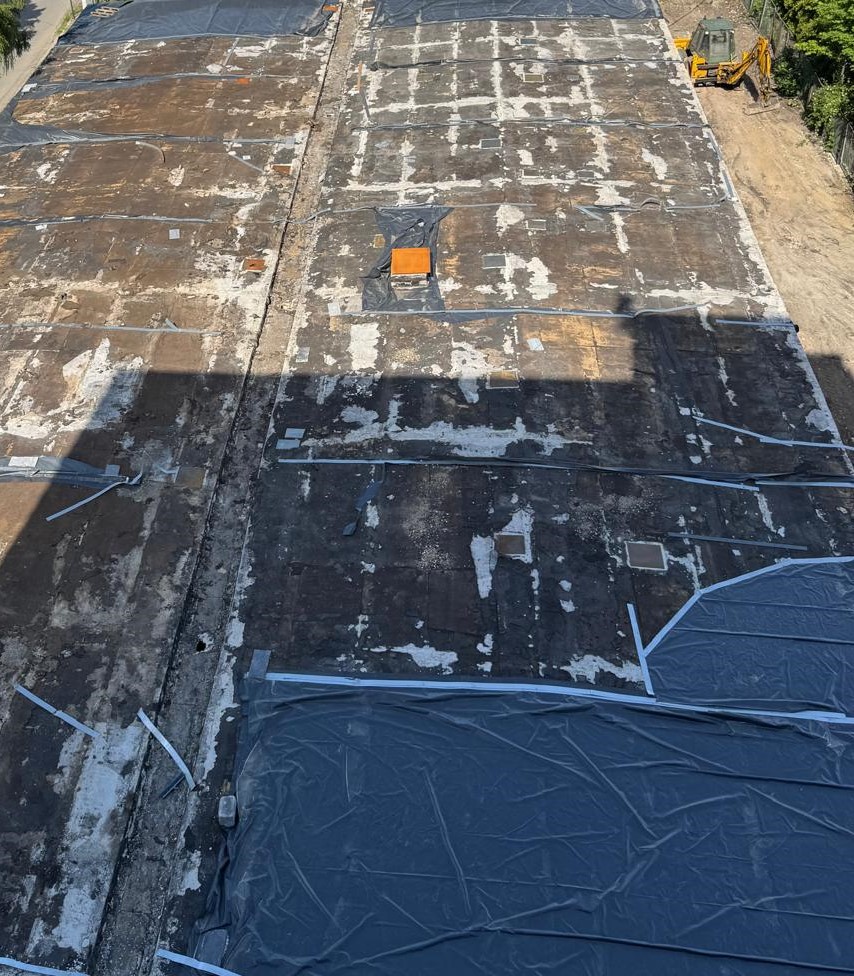
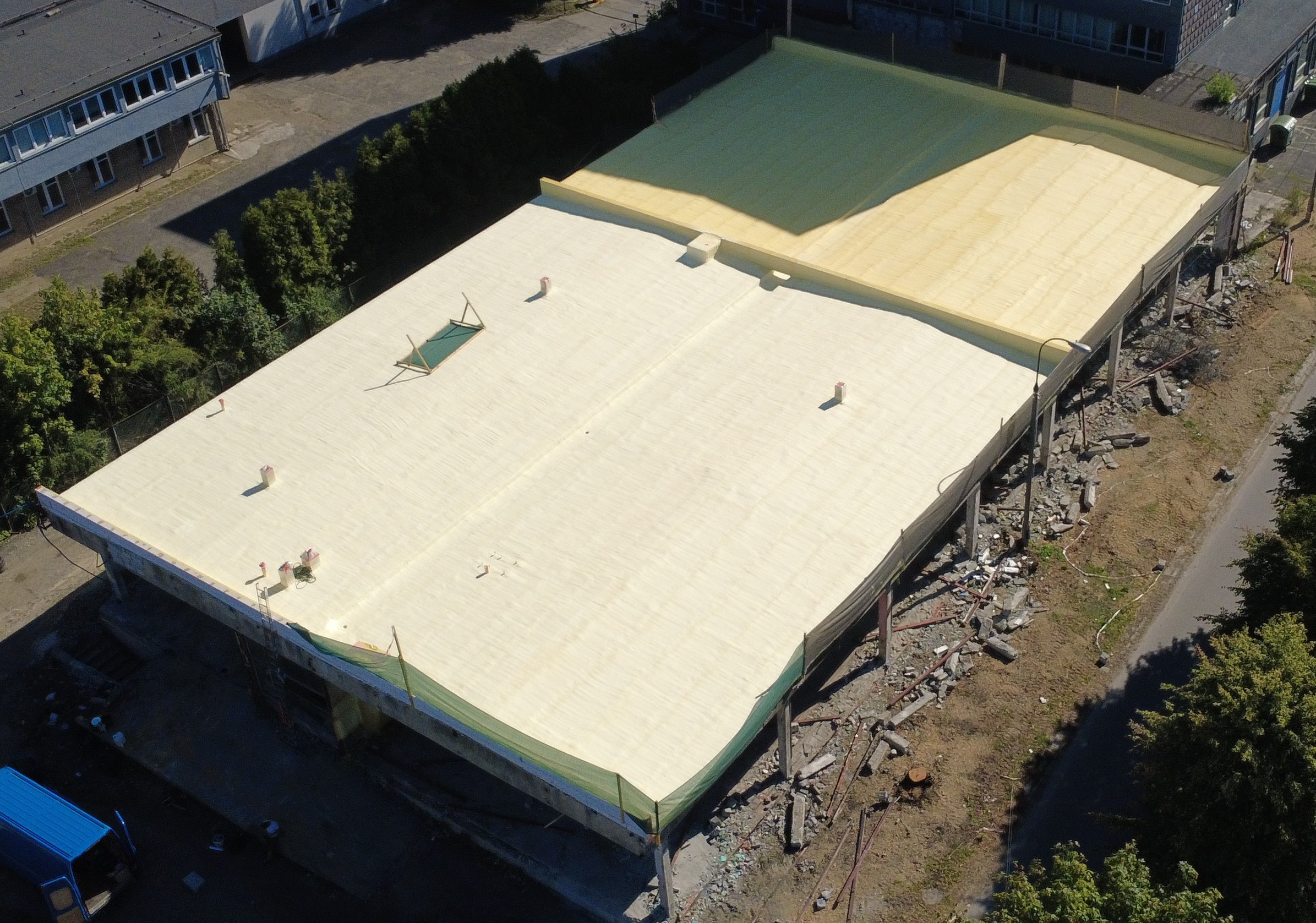
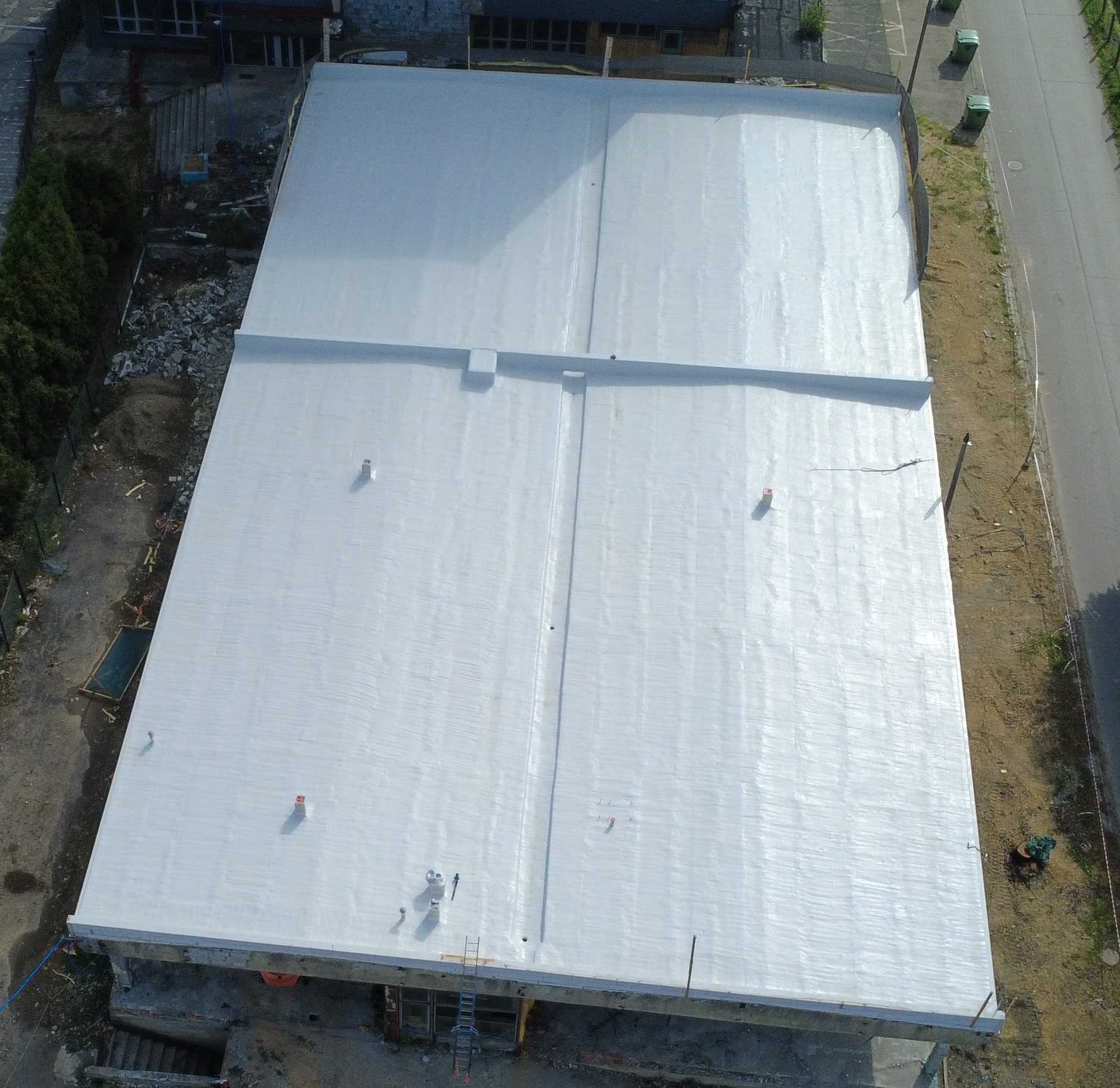
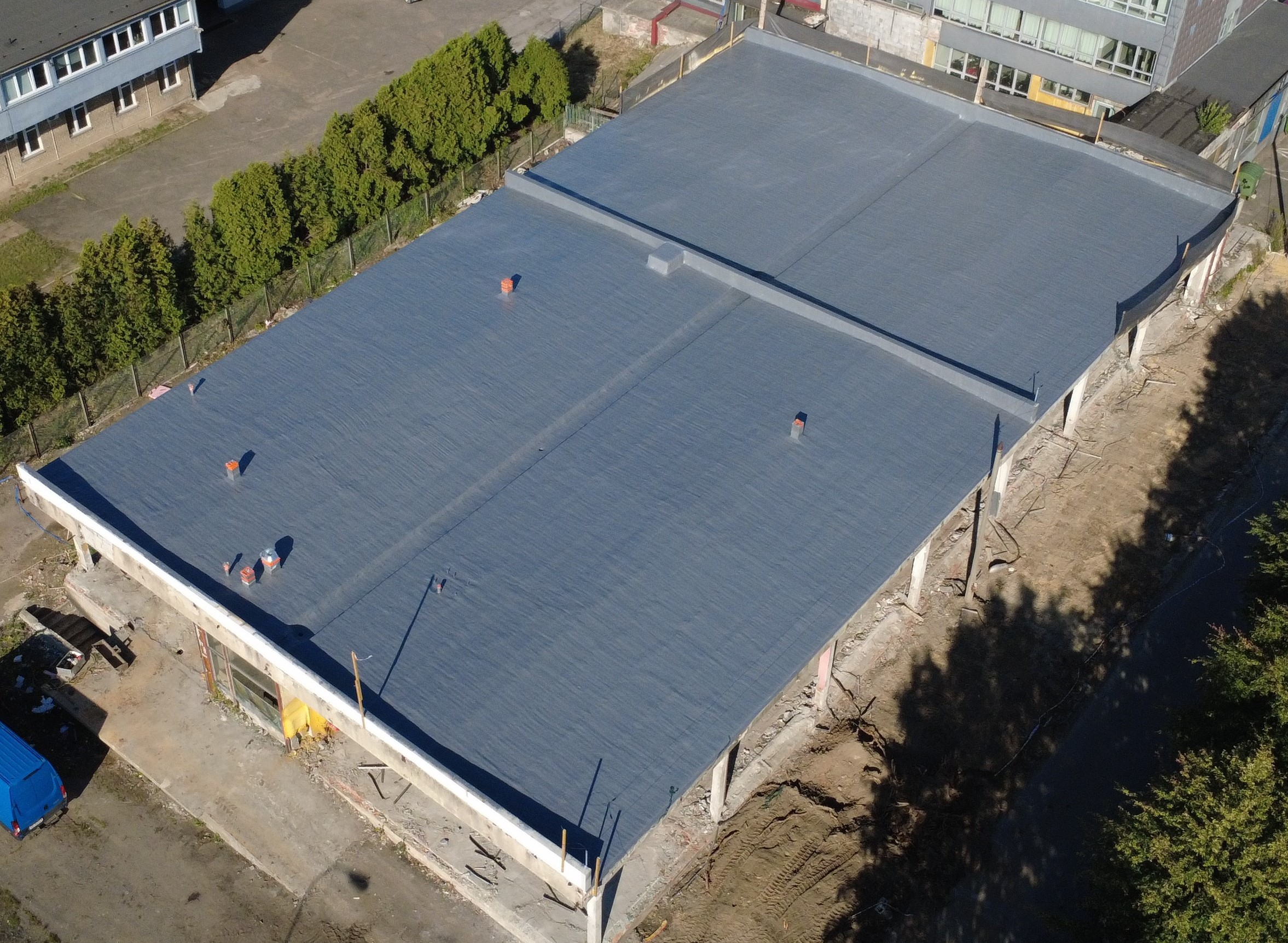
Before waterproofing we can also spray PUR foam insulation. That way you combine thermal insulation with waterproofing.
Polyurethane membrane – what is it, exactly?
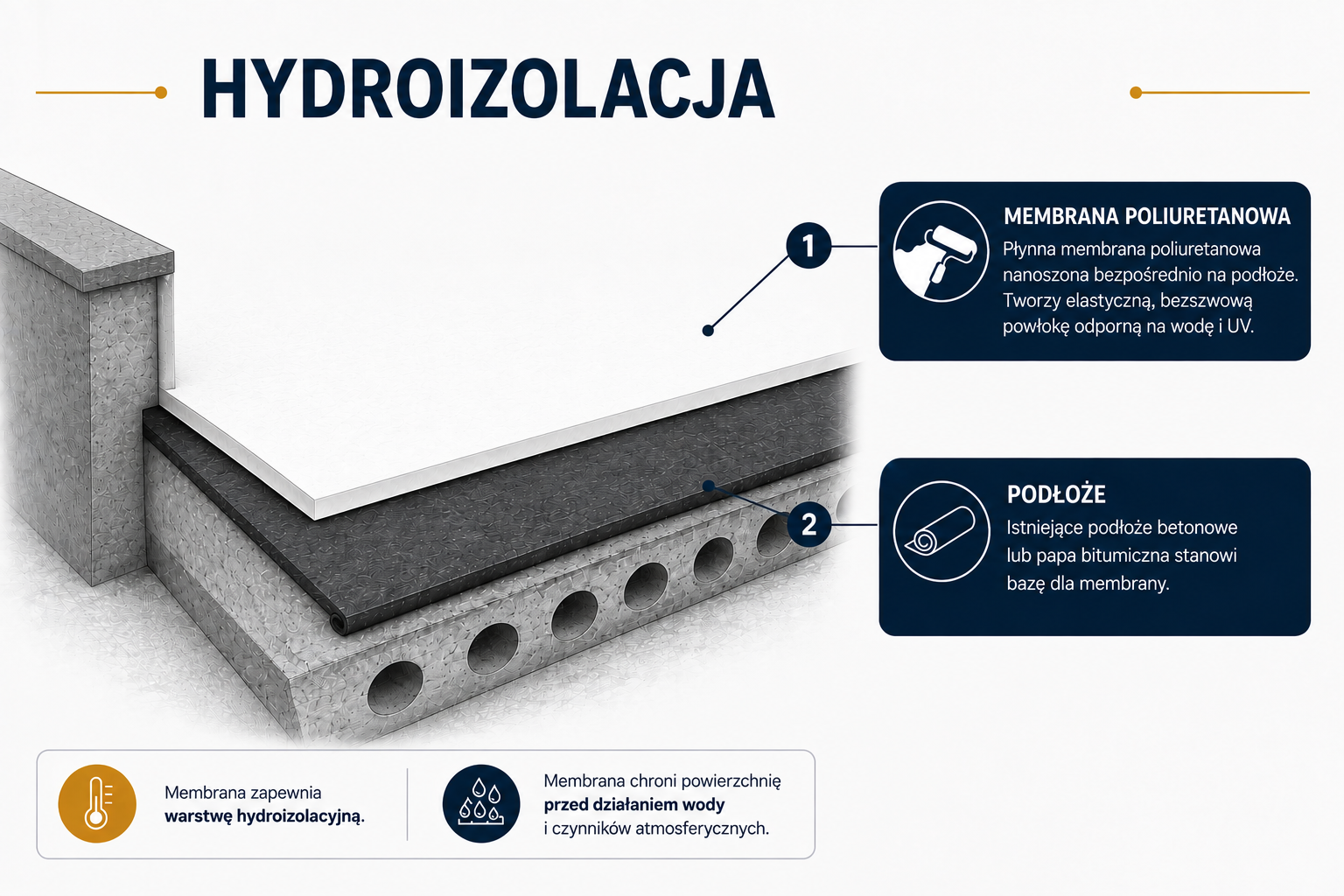
A polyurethane membrane is a modern waterproofing system applied directly onto a properly prepared roof surface. The material is applied in liquid form, so it follows the shape of the substrate and every detail on it. That matters most in the places that usually cause trouble on roofs: chimneys, parapets, skylights, roof outlets, flashings and service penetrations.
Once cured it forms a continuous, flexible, seamless white waterproofing coating.
Continuous and seamless? There are no laps, welds or joints between strips of material.
Flexible? It does not form a rigid shell — it can follow slight movement of the substrate. A roof is always working: it heats up in the sun, cools at night, contracts in winter and expands in summer. Bitumen felt is too stiff, so it cracks.
A white membrane reflects a large share of solar radiation, so it absorbs less energy than dark roof coverings such as bitumen felt. That reduces surface heating and thermal load on the roof.
Why choose a polyurethane membrane?
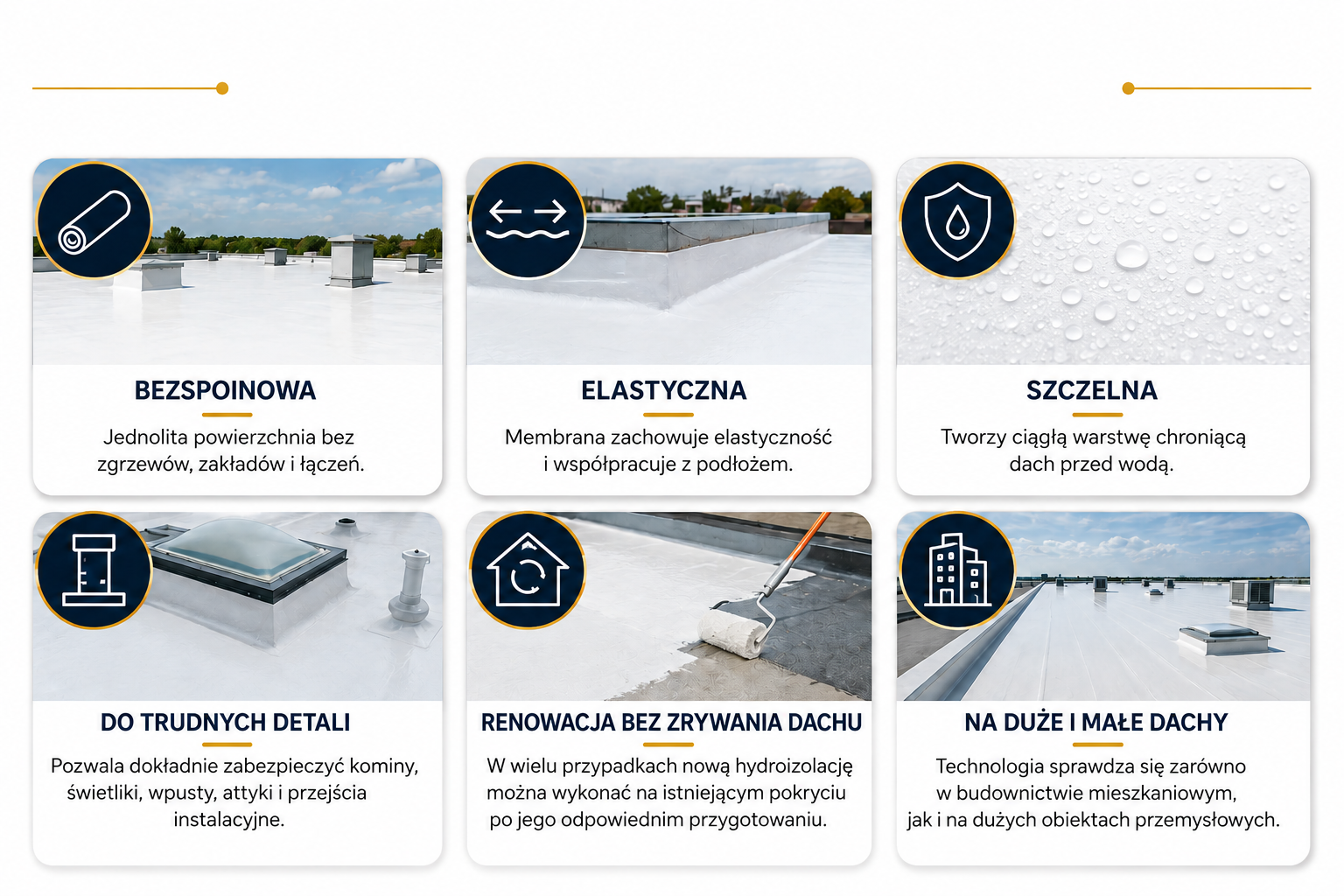
Which roofs can be protected with a polyurethane membrane?
Whether waterproofing can be applied always depends on the condition of the existing roof and on proper surface preparation. In practice we use this technology both on a single-family house and on a hall of 2,000 m2. We apply it on flat roofs covered with bitumen felt or on a concrete substrate.
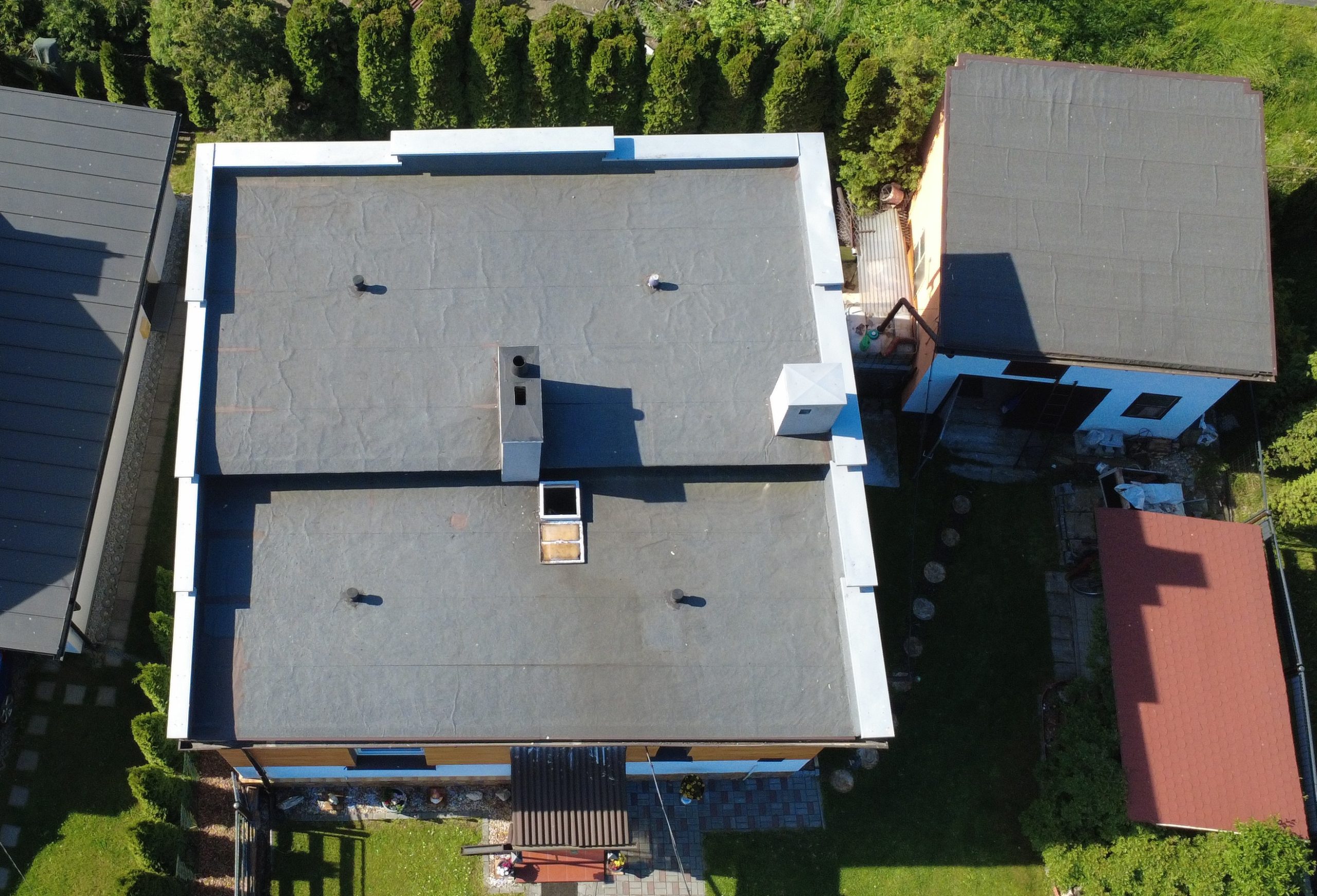
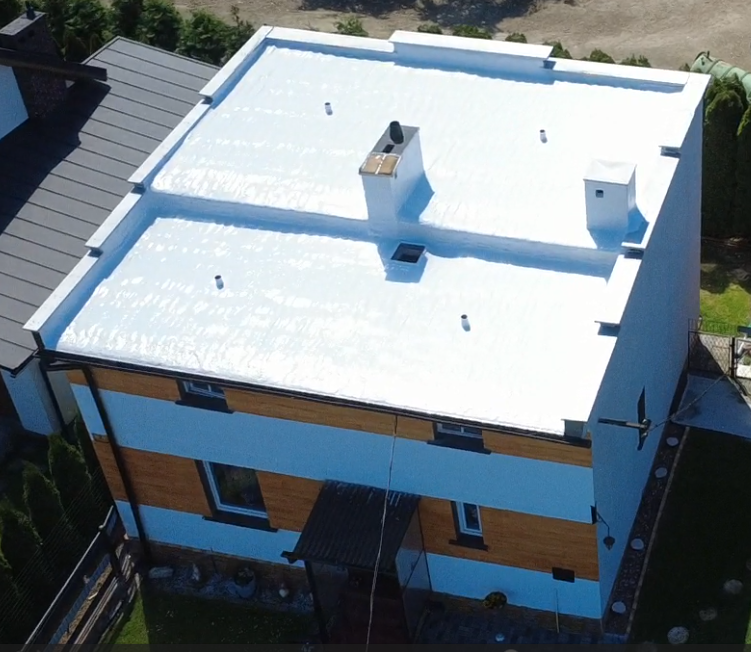
How does Thermocomplex waterproof a roof?
Site survey
Substrate preparation
Application of the liquid polyurethane membrane
Inspection of the finished waterproofing
Does the roof need insulation as well as waterproofing? We have a way.
Combine thermal insulation with waterproofing
On halls, warehouses and other industrial roofs we can install a complete system combining closed-cell PUR spray foam with liquid polyurethane membrane waterproofing. PUR foam forms a continuous thermal layer, cutting heat loss through the roof. It is then protected by the polyurethane membrane system against water, UV radiation and the weather.
The result is a roof that does two jobs: thermal insulation + waterproofing.
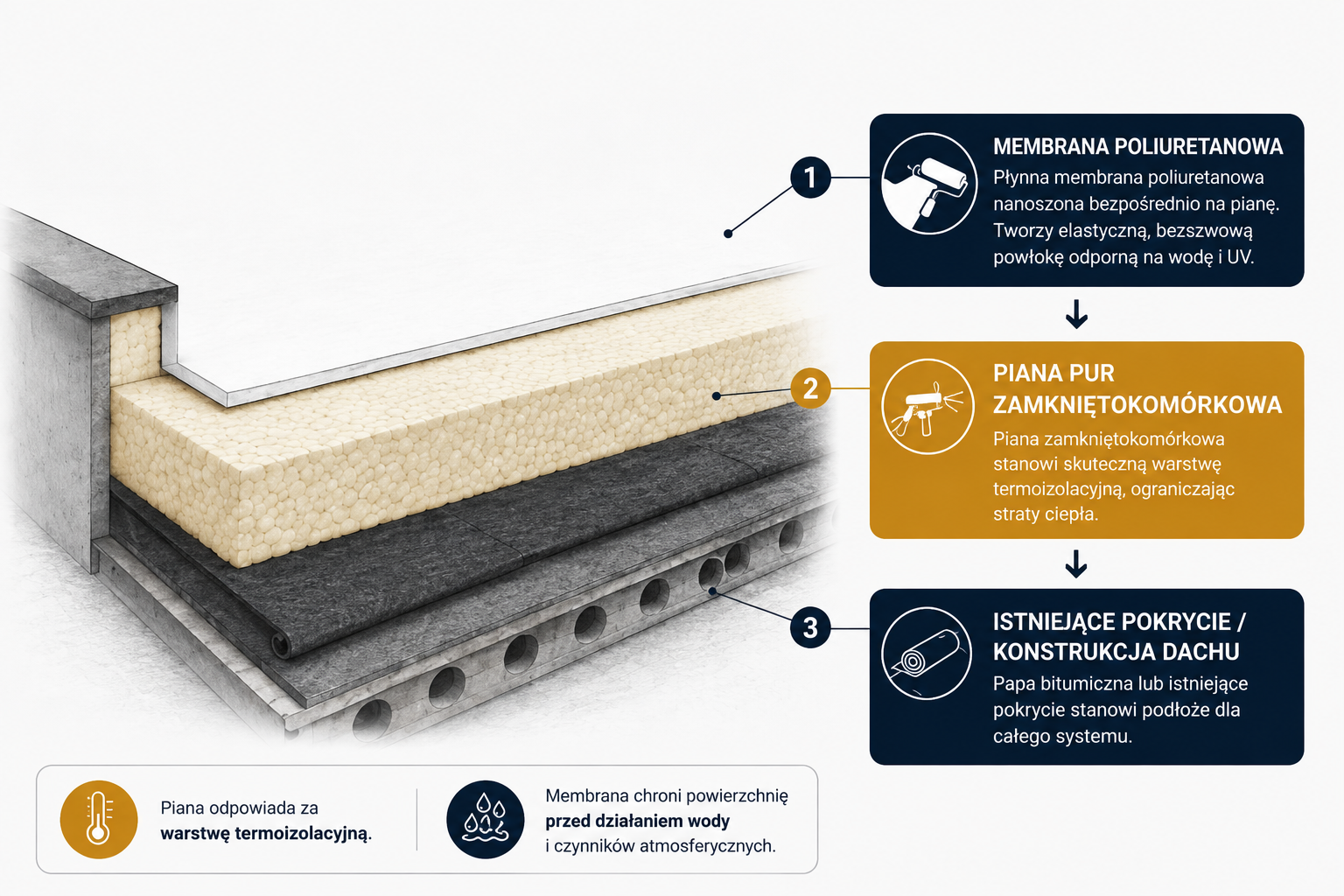
This is especially worth considering when refurbishing halls, warehouses, industrial and farm buildings whose existing roofs need both a tighter seal and better insulation.
Is your roof leaking? Let's check first whether it really has to be stripped.
Call us and book a free quote on 663 322 000, or use the contact form on the site. Attach photos if you can. We will assess whether waterproofing can be done without stripping the existing covering.